
The network fabric built for mission-critical AI
As AI and machine learning reshape operations across U.S. federal missions, Nokia Federal Solutions delivers the ultra-scalable, secure, and automated switching architecture needed to power the next generation of data center fabrics. Built on Nokia’s proven technology and adapted for mission-critical environments, our data center switching portfolio meets the performance, resilience, and sovereignty demands of U.S. federal AI workloads.
Whether supporting GPU clusters for AI model training or building real-time inference platforms for tactical decision-making, Nokia Federal provides switching solutions that operate with precision, at scale, and with confidence.
On this page
Smarter networks for smarter missions
AI-optimized leaf-spine and super-spine switching
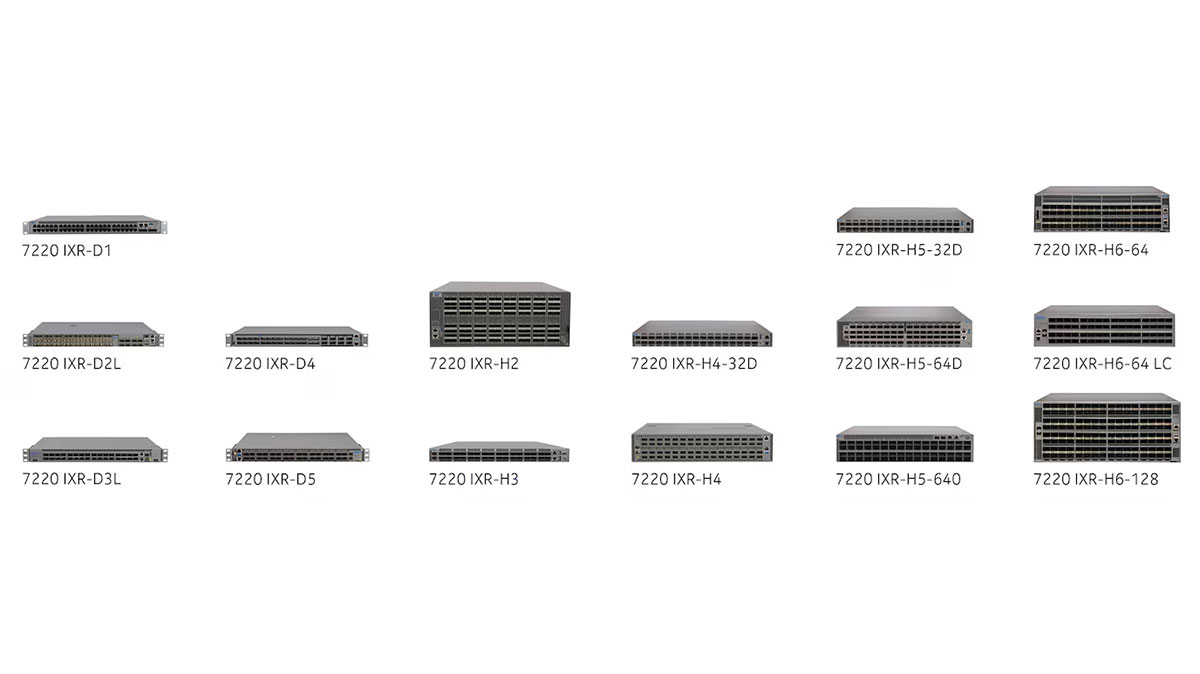
Nokia’s data center switching fabric enables ultra-low latency, lossless performance and high throughput required for AI model training and real-time inference. Our modular and fixed platforms are designed for seamless integration with high-density GPU infrastructure.
Open, automated, and programmable at every layer
Built on Nokia SR Linux, our network operating system delivers advanced programmability, native telemetry, and support for open standards including SONiC. Combined with our Event-Driven Automation (EDA) framework, agencies can dramatically reduce manual tasks and human error.
Scalable switching for high-capacity workloads
With platforms delivering up to 102.4 Tb/s and 1.6 Tbps interfaces, our portfolio scales to support the densest AI workloads across multi-site data center environments with power efficiency and fu-ture-ready capacity.
Built for sovereign, mission-critical environments
Our switching solutions are engineered for compliance, supply chain assurance, and operational resilience. Deployed by cleared personnel through Nokia Federal, these solutions ensure control and trust in every deployment.
Innovative switching solutions for AI data centers

High-throughput, lossless fabrics for AI model training
Enable high-performance data movement between GPU nodes to reduce training time and accelerate mission outcomes.

Resilient fabrics for real-time inference and decision support
Support latency-sensitive workloads critical for national security, cyber operations, and autonomous systems.

Unified automation and operations
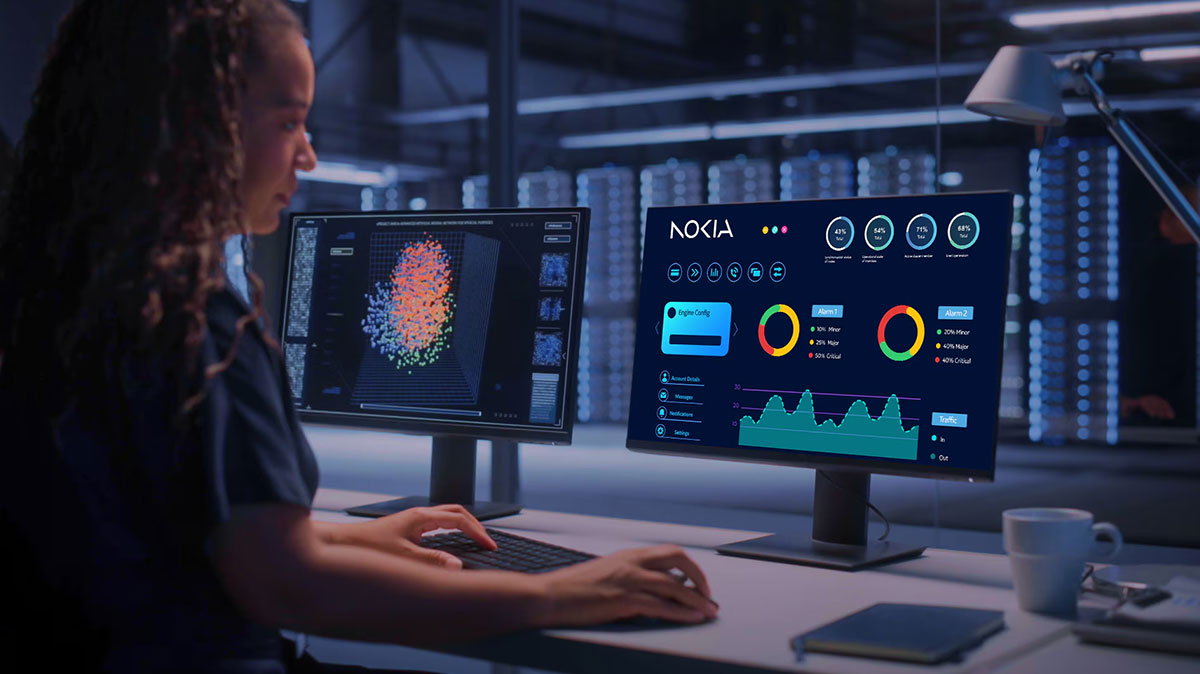
Leverage intent-based, event-driven automation for Day 0 to Day 2+ operations with digital twin simulation, change validation, and secure automation pipelines.

Open ecosystem integration
Support open standards and APIs to integrate with orchestration, monitoring, and workload placement tools across hybrid and multi-cloud environments.
Intelligence and defense AI model training
Scale-out fabrics supporting hundreds of GPU nodes and petabyte-scale data movement.
Edge-to-core inference fabrics
Support distributed inference workloads across field, base, and centralized facilities with consistent performance.
Secure, sovereign cloud deployments
Build switching architectures with control over supply chain, software, and automation to support trusted federal cloud environments.
Mission operations and real-time analytics
Enable real-time pattern recognition and situational awareness for mission-critical applications.

Frequently asked questions about data center switching for AI fabrics
What is an AI fabric?
An AI fabric is a high-performance data center network architecture that connects GPUs, servers, storage systems, and applications supporting artificial intelligence and machine learning workloads. AI fabrics are designed to provide the low latency, high bandwidth, and scalability required for modern AI environments.
Why do AI workloads need specialized networking?
AI workloads generate large amounts of east-west traffic between compute and storage resources. Traditional enterprise networks are often not designed for these communication patterns. AI fabrics provide the performance, resiliency, and scalability needed to support AI training, inference, and high-performance computing workloads.
How do AI fabrics improve AI performance?
AI fabrics help reduce network bottlenecks and improve communication between compute resources. By providing predictable latency and high-capacity connectivity, AI fabrics help organizations maximize infrastructure utilization and improve the performance of AI applications.
How does Nokia Federal Solutions support AI fabrics?
Nokia Federal Solutions helps federal agencies design, deploy, integrate, and support AI fabric architectures using Nokia data center networking technologies. We work with defense, civilian, and national security organizations to build scalable AI-ready infrastructure that supports artificial intelligence, machine learning, advanced analytics, and mission-critical workloads.
How does Nokia Federal Solutions build AI-ready data centers?
Nokia Federal Solutions helps agencies modernize data center infrastructure through high-performance switching, network automation, operational visibility, and scalable architecture design. Our approach enables federal organizations to establish the network foundation required to support current and future AI initiatives.
How does Nokia Federal Solutions support AI networking?
Nokia Federal Solutions helps federal agencies address the bandwidth, latency, scalability, and operational requirements associated with AI workloads. Using Nokia networking technologies, we help customers deploy resilient AI networking environments capable of supporting data-intensive applications and mission-critical operations.
How does Nokia technology support AI fabrics?
Nokia technologies provide the switching, routing, network operating systems, automation, and telemetry capabilities required to build modern AI fabrics. Nokia Federal Solutions helps U.S. federal agencies apply these technologies to support secure, scalable, and operationally efficient AI infrastructure.
How does the Nokia 7250 IXR support AI fabrics?
The Nokia 7250 Interconnect Router (IXR) provides high-capacity switching and routing capabilities for large-scale AI clusters and high-performance computing environments. Nokia Federal Solutions helps U.S. federal agencies deploy and integrate the 7250 IXR within AI fabric architectures that support mission-critical artificial intelligence, machine learning, and advanced analytics workloads. The platform enables organizations to scale AI infrastructure while maintaining predictable network performance.
What is Nokia Event-Driven Automation?
Nokia Event-Driven Automation is a Nokia-developed automation framework that enables networks to respond automatically to operational events and changing conditions. While Nokia develops the technology, Nokia Federal Solutions helps U.S. federal agencies design, deploy, integrate, and support Event-Driven Automation within AI fabric and data center environments. By combining telemetry, analytics, and automation workflows, agencies can improve operational efficiency, reduce network management complexity, and support mission-critical operations.
Why are AI fabrics important for federal agencies?
Federal agencies are increasingly adopting artificial intelligence, machine learning, and advanced analytics to support mission requirements. AI fabrics provide the networking foundation needed to support these workloads while maintaining performance, resiliency, and operational efficiency.
Why choose Nokia Federal Solutions for AI fabrics?
Nokia develops the networking technologies used in modern AI data centers, including the 7220 IXR, 7250 IXR, SR Linux, and Event-Driven Automation.
Nokia Federal Solutions helps U.S. federal agencies deploy, integrate, support, and sustain these technologies in mission-critical environments. We combine Nokia innovation with federal mission expertise to help agencies build secure, scalable, and AI-ready data center infrastructures.